
The Beginning
On March 18, 2025, Arkansas Representative Matt Brown introduced House Bill 1679, legislation that would fundamentally change the rights of family members during the organ-donation process. The bill was inspired by Brown’s personal experience during his father’s final moments. He recounted that experience during a March 2025 House hearing.
The bill, which amended the Arkansas Anatomical Gift Act, enhanced reporting requirements for organ procurement organizations (“OPOs”) and included provisions allowing eight classes of individuals to revoke an organ donor’s wishes after the donor’s death.1
While the bill was well received by Brown’s fellow representatives, OPOs and organ-transplant recipients expressed concerns during the initial hearing.
Despite that opposition, the bill was unanimously approved by a 98–0 vote and became Act 861.2
Arkansas House
Act 861 passed 98–0
The recorded House vote showed no opposition.
To understand the significance of Act 861, and the controversy surrounding it, it is important to first consider the much larger national debate over the organ-procurement system.
The National Controversy
In September 2024, Nyckoletta Martin, then an organ-preservation coordinator at Kentucky Organ Donor Affiliates (“KODA”), one of the largest OPOs in the United States, sent a letter to Congress describing a disturbing organ-donation case.
Anthony Thomas “TJ” Hoover II, a 33-year-old man who suffered a drug overdose and neurological injury, entered the donation-after-circulatory-death pathway after his family elected to withdraw life support and authorize organ donation.
During his “honor walk”, a tribute in which family, friends, and hospital staff line the hallways as an organ donor is transported, TJ reportedly showed clear signs of awareness. As he was transported into the operating suite, witnesses reported that he was thrashing and crying. KODA staff nevertheless insisted that organ procurement should proceed.
The surgeons refused to perform the procedure and walked out of the operating room.
TJ survived the ordeal, although he continues to suffer from severe effects of his stroke and overdose, along with PTSD associated with the operating-room incident. Watch as Rep. Neal Dunn recounts the case during a congressional hearing.3
Unfortunately, TJ’s case was not the only reported case of mistaken death highlighted during the congressional hearing.
Misty Hawkins, a 42-year-old woman with a cognitive disability, suffered a tragic accident and was placed on life support. Her mother consented to organ donation. According to Rep. Kat Cammack, a surgeon made an incision in Hawkins’s chest and sawed through her breastbone before doctors discovered that her heart was still beating and that she appeared to be breathing.4
Similarly, Rep. Cammack recounted the case of a 39-year-old woman with Down syndrome who suffered a ruptured intracranial aneurysm and was pronounced dead before organ procurement began. During the procedure, surgeons discovered signs of circulation and halted the operation. The patient was administered fentanyl and lorazepam and was pronounced dead for a second time 18 minutes later. The case report classified her death as a homicide and attributed the primary cause of death to acute fentanyl toxicity. Watch as Rep. Cammack discusses these cases.5
These cases are especially troubling when considered alongside concerns about discrimination within the organ-transplant system.
According to Rep. Cammack, Baby Zion, an infant with Down syndrome, was denied a lifesaving heart transplant in 2021 because of discriminatory practices. A bill introduced by Rep. Cammack, the Charlotte Woodward Organ Transplant Discrimination Prevention Act, seeks to prohibit such discrimination by ensuring that transplant decisions cannot be based solely on an individual’s disability status.6
The Federal Response
The federal government has responded to these concerns with increased scrutiny of the organ-procurement system.
After directing the Organ Procurement and Transplantation Network to reopen a Kentucky case involving potentially preventable harm, the Health Resources and Services Administration (“HRSA”) conducted an independent investigation. HRSA found that at least 28 patients may not have been deceased when organ procurement was initiated.7
Following the investigation, HRSA issued corrective directives to OPOs and warned that failure to comply with enhanced patient-safety and transparency requirements could result in decertification.8
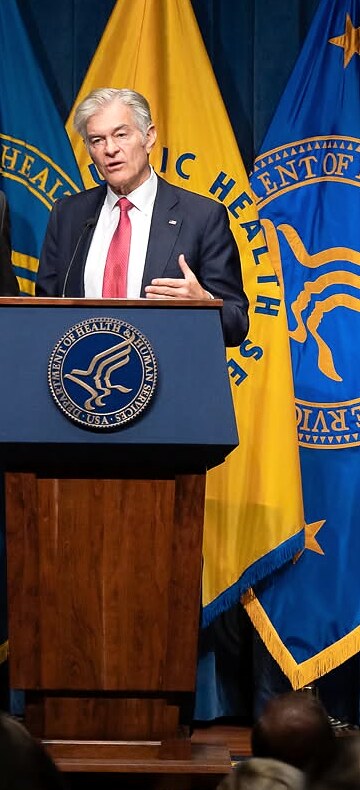
Restoring Public Trust
We're going to be tougher than ever before, because if we lose trust in the organ transplantation system of this country, tens of thousands of people are going to die yearly.
These measures further intensified an already contentious debate over federal regulation of OPOs.
In 2020, the Centers for Medicare & Medicaid Services established the “Outcome Rule,” which disrupted the existing model under which OPOs operated as geographic monopolies. The rule established a tier-based recertification system that substantially increased competition among OPOs.9
That competition has not gone unchallenged.
In HonorBridge v. Kennedy et al., HonorBridge, the largest OPO in North Carolina, described the administration’s outcome rule as replacing regional exclusivity with a “cutthroat, iterative Hunger-Games-style competition between OPOs.”10
The obvious question is whether the 2020 CMS changes have affected OPO behavior.
A narrowly scoped study found that OPOs tripled the rate at which they recovered pancreases for research following the reforms. That study also found a nearly 30% increase in kidneys recovered per OPO. However, only about 39% of those additional recoveries resulted in additional transplants.11
The competitive pressures created by the new system also operate within an industry involving substantial financial activity. According to 2024 data, independent OPO filings reported approximately $3 billion in procurement revenue.12
Organ Procurement
The Financials
The annual scale of deceased-donor organ procurement
2024 CMS cost reports show roughly $3 billion in OPO procurement revenue. Separate Form 990 and SRTR datasets provide organization-wide excess-revenue and organ-volume context.
Procurement revenue reported by independent OPOs in 2024
Average revenue exceeding expenses
Average organization-wide excess revenue per filer among 39 unique legal filers with complete data in the IRS calendar-year-2024 extract.
Deceased-donor organs transplanted
Total organs transplanted July 2024 to June 2025.
None of this establishes that financial incentives caused the troubling cases described above. It does, however, raise an important policy question: whether the incentives created by the current system consistently align with the interests of donors and transplant recipients.
The Legal Challenge
Against this national backdrop, the enhanced reporting requirements established by Act 861 received broad support.
The provision allowing other individuals to override an organ donor’s prior wishes has been far more controversial.
As written, the Act allows eight successive classes of individuals, including children, grandchildren, and guardians, to modify, amend, or revoke a donor’s prior anatomical gift.13
Act 861
The 8 Kinship Categories
Who may act on a donor’s prior anatomical gift
Act 861 establishes eight successive classes that may modify, amend, or revoke a donor’s anatomical gift after death.
Act 861’s kinship sequence applies.
Surviving spouse
The surviving spouse of the donor.
Sole child or majority
The sole surviving child or, if more than one, a majority of the surviving children.
One or both parents
The surviving parent or parents of the donor. If one parent is absent, the remaining parent may act.
One sibling or majority
The surviving sibling or, if more than one, a majority of the surviving siblings.
One grandparent or majority
The surviving grandparent or, if more than one, a majority of the grandparents.
One grandchild or majority
The surviving grandchild or, if more than one, a majority of the grandchildren.
Court-appointed guardian
The guardian of the donor at the time of the donor’s death, if one had been appointed.
Descending order
The next person entitled to inherit the donor’s estate under the laws of descent and distribution.
This provision seems difficult to reconcile with a basic principle familiar to estate planning: individuals generally have the ability to determine how their property will be distributed after death.
A home.
A bank account.
A vehicle.
Even a pet.
Those decisions ordinarily do not become subject to revision simply because a family member disagrees with them after the person dies.
Why should the law treat a person’s prior decision concerning the disposition of their organs differently?
Estate planning also provides mechanisms through which individuals may disinherit estranged family members or otherwise limit their involvement in the disposition of an estate. Act 861 does include a provision excluding estranged family members, but it does not clearly identify who determines whether the statutory definition of estrangement has been satisfied.14
When that question is disputed, litigation may become the only practical means of resolving it.
That possibility is particularly significant in organ transplantation because time is not merely inconvenient, but it can determine whether an organ remains viable.
One study found that brain-death protocols lasting more than 30 hours were associated with 67% higher odds of donor loss from cardiac arrest. Delays caused by disputes over who has authority to revoke an anatomical gift could therefore have consequences extending well beyond the immediate family.15
Given those concerns, OPOs have challenged Act 861 in federal court.
The most prominent case is Southern Legacy of Life et al. v. Jester et al., which resulted in a temporary restraining order blocking enforcement of Act 861.16
Southern Legacy of Life, formerly known as ARORA, primarily raised federal constitutional questions, including whether the Act violates the Dormant Commerce Clause and the Supremacy Clause.
The Dormant Commerce Clause limits the ability of states to enact laws that unduly burden interstate commerce.17 That issue is particularly important in organ transplantation because the federal transplant framework has long treated donated organs as a national resource rather than a resource belonging exclusively to the state in which they are recovered.
A federal task force established under the National Organ Transplant Act concluded that, when practical, potential recipients should be considered equally regardless of where the donor organ was recovered.18
Recent OPTN data suggests that interstate organ sharing has increasingly reflected that principle.19
Organ Transportation
Organs Travel Farther
Deceased-donor transplant geography changed sharply over a decade
OPTN data show more organs crossing longer distances nationally, while many Arkansas residents now receive transplants beyond the state's borders.
of Arkansas recipients were transplanted outside the state in 2025
Transported more than 250 nautical miles
The annual number more than doubled nationally between 2015 and 2025.
Transported more than 150 nautical miles
More than half of U.S. deceased-donor transplants crossed this distance in 2025.
Act 861 creates several unanswered questions in that context.
For example, it is unclear whether its provisions would apply to an Arkansas resident whose organs are recovered in another state. It is similarly unclear whether an out-of-state resident would become subject to Act 861 merely because donation or recovery occurred in Arkansas.
In Pike v. Bruce Church, Inc., the Supreme Court established a test asking whether the burden imposed on interstate commerce is clearly excessive in relation to the putative local benefits. Once a legitimate local purpose has been identified, the analysis becomes one of degree—including whether that purpose could be achieved through a less burdensome alternative.20
That framework is particularly relevant here.
Act 861 grants eight successive classes of individuals the authority to modify, amend, or revoke a donor’s prior anatomical gift. Yet the Act establishes no deadline for exercising that authority.
That omission creates the possibility of significant delays in a process in which mere hours can matter.
It therefore seems plausible that a law limiting the number of qualifying relatives and establishing a definite deadline for revocation could advance the state’s goals while creating substantially less disruption to the organ-transplant system.
Southern Legacy of Life also alleged that federal law should take precedence over conflicting provisions of Act 861.
Under the Supremacy Clause, valid federal law prevails when it conflicts with state law.21 Congress established federal standards for OPOs through Section 1138 of the Social Security Act and related statutes, which authorize HHS, through CMS, to issue binding regulations governing aspects of the organ-donation process.
Recent CMS guidance states that when first-person consent exists but the family objects to donation, “the potential donor’s wishes must be respected.” The guidance also acknowledges, however, that state laws may affect this aspect of donation.22
That qualification complicates the challenge to Act 861.
Allowing family members to revoke a donor’s first-person authorization appears difficult to reconcile with CMS’s instruction that the donor’s wishes be respected. At the same time, no federal statute or CMS regulation expressly addresses the specific circumstance created by Act 861: a state authorizing family members to revoke a donor’s first-person authorization after death.
The dispute therefore raises a question that is more complicated than a simple conflict between state and federal law.
During the proceedings, the court also questioned how an anatomical gift could remain subject to revocation after the donor’s death under existing Arkansas common law.
The defense argued that the gift is not complete at the moment of death, but when the organ leaves the donor’s body.23
Judge James M. Moody Jr. responded as shown below.

From The Bench
I don’t want to belabor this, but you said as soon as the donor gives up dominion. And how does he exercise any more dominion from the time that he dies? That’s what—philosophically, how do you do that from the grave?
The estate-planning comparison again becomes relevant.
A beneficiary generally cannot unilaterally revoke or amend the decedent’s lawful distribution of estate assets after death simply because the beneficiary prefers a different result.
Historically, anatomical-gift law has moved in a similar direction.
The 1987 Uniform Anatomical Gift Act provided that an anatomical gift not revoked by the donor before death was irrevocable and did not require the consent of another person after the donor’s death.24 Nevertheless, many procurement organizations continued seeking family consent.
The 2006 Revised Uniform Anatomical Gift Act strengthened those protections by preventing families from making, amending, or revoking an anatomical gift when the donor had already exercised first-person authorization.25
Act 861 represents a significant departure from that approach.
On August 4, 2025, the federal court entered a temporary restraining order blocking enforcement of Act 861.26
As of September 7, 2026, the docket I reviewed showed no entries after November 27, 2025. I will update this article as the case develops.
My Thoughts
I have proudly been an organ donor since I received my first driver’s license at age 16.
The research I conducted for this article did not change my belief in organ donation. It did, however, change my understanding of the system responsible for carrying it out.
The cases discussed above reveal an imperfect system in which the incentives facing institutions do not always appear to align perfectly with the interests of donors and their families. That problem extends far beyond what any single state law can solve.
Meaningful federal reform is needed to ensure that patient safety, donor intent, transparency, and accountability remain at the center of the organ-procurement system.
At the same time, the disturbing cases discussed in this article should not obscure the extraordinary good that organ donation accomplishes every day.
Consider Haley, who was diagnosed with a rare blood disorder. Complications from her condition caused such severe pain that she could barely walk. As toxins from her organ damage began affecting her cognitive function, she was placed on the transplant list.
She eventually received a five-organ transplant.
After a yearlong recovery, she was pain-free and able to return to a normal life.27
Stories like hers are why reforming the system matters.
My hope is that current and future federal reforms will ensure that organ donors receive the dignity and respect they deserve. I also hope that pending legislation, including the Organ Transplant Discrimination Prevention Act, will help ensure that potential recipients are treated equally and that disability does not improperly influence decisions about organ transplantation.28
The goal should not be to undermine confidence in organ donation.
It should be to build a system worthy of that confidence.
Through careful reform, greater transparency, and meaningful accountability, we can protect donors, safeguard recipients, and preserve a program that has saved thousands of lives.
Footnotes & SourcesView all 28 citations
Footnotes
Act 861, § 1, 95th Gen. Assemb., Reg. Sess. (Ark. 2025) (codified at Ark. Code Ann. §§ 20-17-1228 to -1229),
official PDF
.
↩
Arkansas State Legislature,
HB1679 Bill Information
, 95th General Assembly, Regular Session 2025.
↩
Ensuring Patient Safety: Oversight of the U.S. Organ Procurement and Transplant System
: Hearing Before the Subcomm. on Oversight & Investigations of the H. Comm. on Energy & Commerce, 119th Cong. (2025) (remarks of Rep. Neal Dunn); Health Res. & Servs. Admin.,
Information Memorandum: KYDA Donor Case Investigation12–13, 44 (Mar. 24, 2025) (explaining that the case followed the donation-after-circulatory-death pathway and was not a brain-death case); Press Release, U.S. Dep’t of Health & Hum. Servs.,
HHS Finds Systemic Disregard for Sanctity of Life in Organ Transplant System
(July 21, 2025).
↩
Ensuring Patient Safety: Oversight of the U.S. Organ Procurement and Transplant System
: Hearing Before the Subcomm. on Oversight & Investigations of the H. Comm. on Energy & Commerce, 119th Cong. 189 (2025) (statement of Rep. Kat Cammack) (quoting Brian M. Rosenthal & Julie Tate, A Push for More Organ Transplants Is Putting Donors at Risk, N.Y. Times, July 20, 2025).
↩
Annie Bao & Shiping Bao,
Pronounced Dead Twice: What Should an Attending Physician Do in Between?
, 22 Am. J. Case Rep. e930305 (2021).
↩
Press Release, Rep. Kat Cammack,
Reps. Kat Cammack & Debbie Dingell Introduce Bipartisan Charlotte Woodward Organ Transplant Discrimination Prevention Act
(Feb. 24, 2025).
↩
Press Release, U.S. Dep’t of Health & Hum. Servs.,
HHS Finds Systemic Disregard for Sanctity of Life in Organ Transplant System
(July 21, 2025).
↩
Letter from Suma Nair, Assoc. Adm’r, Health Sys. Bureau, Health Res. & Servs. Admin., to Richard N. Formica, Jr., President, Organ Procurement & Transplantation Network Bd. of Dirs., & Rexanah Wyse Morrissette, Interim Exec. Dir., Organ Procurement & Transplantation Network (May 28, 2025) (on file with author).
↩
Organ Procurement Organizations Conditions for Coverage: Revisions to the Outcome Measure Requirements for Organ Procurement Organizations, 85 Fed. Reg. 77,898 (Dec. 2, 2020),
official PDF
.
↩
Complaint ¶ 6, HonorBridge v. Kennedy, No. 4:26-cv-00003-M-RN (E.D.N.C. Jan. 7, 2026).
↩
Jonathan Miller et al.,
Impact of Centers for Medicare and Medicaid Services Final Rule on Organ Procurement Organization Metrics and Procedural Trends in the Procurement of Pancreata for Research
, 53 Pancreas e176 (2024); Erkut Y. Ozbay, Ariel Rava, Sergio S. Urzúa & Emanuel Zur,
Economic Incentives and Organ Procurement: Evidence from a U.S. Reform
, NBER Working Paper No. 34140 (2025), https://doi.org/10.3386/w34140; see also Nat’l Bureau of Econ. Rsch.,
Consequences of Organ Procurement Reform(Dec. 1, 2025).
↩
CMS HCRIS OPO94 cost reports (2024), independent OPO filings (author calculations); Stephen Ussery,
OPO Form 990 Excess-Revenue Dataset, “Unique Filers” & “Dashboard” worksheets (2026) (calculating average organization-wide excess revenue of approximately $3.67 million among 39 unique legal filers with complete data in the IRS calendar-year-2024 extract); Scientific Registry of Transplant Recipients,
Organ Procurement Organization Reports: Final Tables, July 1, 2024–June 30, 2025
(2025),
archived workbook
.
↩
Act 861, § 1, 95th Gen. Assemb., Reg. Sess. (Ark. 2025) (codified at Ark. Code Ann. § 20-17-1228(a)).
↩
Ark. Code Ann. § 20-17-1228(f)(2) (Supp. 2025).
↩
Glauco A. Westphal et al.,
The Effect of Brain Death Protocol Duration on Potential Donor Losses Due to Cardiac Arrest
, 30 Clinical Transplantation 1411, 1411–16 (2016) (reporting OR 1.67, 95% CI 1.38–1.83, after a 30-hour threshold).
↩
Clerk’s Minutes, Southern Legacy of Life v. Jester, No. 4:25-cv-00773-JM (E.D. Ark. Aug. 4, 2025), ECF No. 17 (granting a temporary restraining order against enforcement of Act 861 pending a decision on the merits).
↩
Tennessee Wine & Spirits Retailers Ass’n v. Thomas, 588 U.S. 504, 514 (2019).
↩
Sylvia L. Bryan et al., Cong. Rsch. Serv., R48426,
Organ Procurement and Transplantation: Administration, Oversight, and Policy Issues
(2025).
↩
Organ Procurement & Transplantation Network,
National Data Reports
;
archived HRSA/OPTN data generated June 26, 2026
.
↩
Pike v. Bruce Church, Inc., 397 U.S. 137, 142 (1970).
↩
Kansas v. Garcia, 589 U.S. 191, 202 (2020) (quoting Murphy v. National Collegiate Athletic Ass’n, 584 U.S. 453, 477 (2018)); U.S. Const. art. VI, cl. 2.
↩
Ctrs. for Medicare & Medicaid Servs., U.S. Dep’t of Health & Hum. Servs., QSO-26-05-[OPO & Transplant],
Organ Procurement Organizations (OPOs) and Donor Hospitals’ Responsibilities
5 (Mar. 11, 2026).
↩
Pls.’ Suppl. Mem. L. Supp. Mot. Prelim. Inj. at 8, Southern Legacy of Life v. Jester, No. 4:25-cv-00773-JM (E.D. Ark. Nov. 20, 2025), ECF No. 43 (quoting PI Tr. 174:11–24).
↩
Uniform Anatomical Gift Act § 2(h) (Unif. L. Comm’n 1987).
↩
Revised Uniform Anatomical Gift Act § 8(a) (Unif. L. Comm’n 2006).
↩
Clerk’s Minutes, Southern Legacy of Life v. Jester, No. 4:25-cv-00773-JM (E.D. Ark. Aug. 4, 2025), ECF No. 17; Docket, Southern Legacy of Life v. Jester, No. 4:25-cv-00773-JM (E.D. Ark.) (last accessed September 7, 2026).
↩
Health Res. & Servs. Admin.,
Five-Organ Transplant Restores Body and Mind, OrganDonor.gov.
↩
Press Release, Rep. Kat Cammack,
Reps. Kat Cammack & Debbie Dingell Introduce Bipartisan Charlotte Woodward Organ Transplant Discrimination Prevention Act
(Feb. 24, 2025).
↩